Michael I. Brown

Michael I. Brown

Host, The Unpopular View

40 years of experience in international development in diverse technical sectors in developing countries in Africa, Asia, Latin America, South Pacific, South Asia, and the Caribbean. including natural resource management, community-based planning and decision making, community conservation, environmental compliance, strategic planning, NGO capacity building, conflict management, anti-corruption (and good governance), sustainable agriculture/livelihood and food security, pastoral production systems.

Books

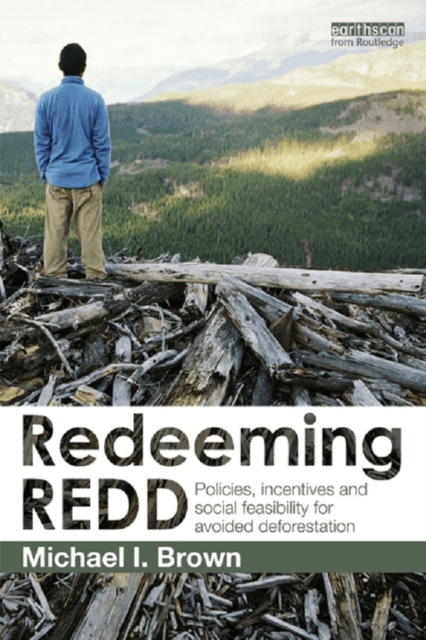
Redeeming REDD cover

Redeeming REDD

Policies, Incentives and Social Feasibility for Avoided Deforestation

2013

A critical examination of REDD and REDD+ climate policies, arguing that technical and economic fixes are not enough without social feasibility, governance reform, and a people-first contract with forest-dependent communities.

View book details
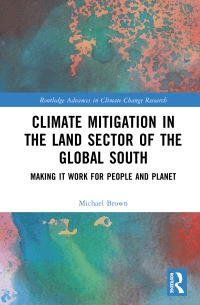
Climate Mitigation in the Land Sector of the Global South cover

Climate Mitigation in the Land Sector of the Global South

Making It Work for People and Planet

2026

A field-tested argument for moving beyond top-down climate mitigation in the land sector toward negotiated governance, recognized land rights, and practical partnerships with Indigenous Peoples and Local Communities.

View book details

Episodes

Episode 2100:21:20

USAID Is Gone. What Should Replace It? | Emily Brearley (3/3)

USAID has been dismantled. The World Bank's own evaluations keep finding what its projects don't achieve.

USAID has been dismantled. The World Bank's own evaluations keep finding what its projects don't achieve. So the question is no longer whether the aid architecture is broken — it's whether anything should replace it.

In the final segment of my three-part conversation with Dr. Emily Brearley — development economist, 25 years at the World Bank and other international institutions, and author of Aid Inferno: How to Reduce Poverty, Combat Global Warming, and Be a Good Person — we each put a blueprint on the table.

We agree on some fundamantal issues and disagree on some important details.

Emily's answer is what she calls Solution 42: sharply narrow what institutions like the World Bank attempt. Stick to the sectors they demonstrably do well. Build in transparency and citizen involvement in project selection and evaluation. Fund a small number of high-impact projects chosen by people in recipient countries themselves. It rhymes with Esther Duflo's evidence-first approach.

We also agree that a social contract is a fundamental missing piece — clear goals, trade-offs and obligations that people on the ground can actually hold institutions to that are negotiated. In 40+ years of fieldwork I never saw one written, and neither USAID nor the World Bank has ever framed a project in those terms. Emily agrees that's a major gap.

Where we diverge somewhat is on who does the work. Should nationals do everything, or is there a place for foreigners with unique capacity building contributions to make?

ABOUT THE GUEST Dr. Emily Brearley is a development economist and former World Bank economist with ~25 years across the World Bank and other international institutions, leading programs in Africa, Latin America and Asia. Aid Inferno is a case-study-driven critique built on World Bank evaluation data arguing that development finance rewards spending and institutional survival over outcomes and accountability.

ABOUT THE SHOW The Unpopular View is for the exhausted middle — evidence over outrage, and criticism that doesn't spare either orthodoxy. Hosted by Michael Brown, international development consultant and author of Redeeming REDD (Routledge, 2013) and Climate Mitigation in the Land Sector of the Global South (Routledge, 2026).

🔔 Subscribe: https://www.youtube.com/@TheUnpopularView_MichaelBrown

All epdisodes: https://theunpopularview.com/episodes

Read episode pageSource episode
Episode 2000:24:33

The Poverty Industry: Dr. Emily Brearley on Why Foreign Aid Keeps Failing

Dr. Emily Brearley spent roughly 25 years inside the World Bank, USAID, and the Inter-American Development Bank — and came out arguing that the aid system is structurally built to avoid measuring its own failure.

Dr. Emily Brearley spent roughly 25 years inside the World Bank, USAID, and the Inter-American Development Bank — and came out arguing that the aid system is structurally built to avoid measuring its own failure. Her book, Aid Inferno: How to Reduce Poverty, Combat Global Warming and Be a Good Person, uses World Bank evaluation data and her own decades in the machine to make the case that a large slice of the development world has become a "poverty industry" — contractors and big NGOs rewarded for spending and survival, not outcomes.

Host Michael Brown brings his own 40+ years running USAID and NGO-funded projects for NGOs and consulting firms mainly in the USAID ecosystem, across the Horn of Africa, the Sahel, Central and Southern Africa, and Madagascar and other areas in the Global South. Michael largely agrees with Emily's structural critique, while pushing on where it might go further: the missing "social contract" between institutions and the communities they claim to serve, and why communities in landscapes can feature in worthy projects IF appropriateness and feasibility drive planning (which they currently largely do not). This is the only way he argues for aid to scale.

In this episode:

Was there ever a real deal between aid institutions and the people they were meant to help? Why does the old "poor countries just need more money" theory keep failing on its own terms? What actually separates a development intervention that works from one that quietly fails? Where cash transfers and bigger loans fit — and where they risk repeating the same mistakes closer to the ground

Read episode pageSource episode
Episode 1900:24:12

Is Foreign Aid a Scam? Two Development Insiders Agree It's Broken, Differ on Scale and Fixes

Views on foreign aid have rarely been this polarized — whether American taxpayers should fund health, education, governance, agriculture, and conservation programs aimed at uplifting the poorest of the poor, and, in conservation's case, protecting planetary resources for every...

Views on foreign aid have rarely been this polarized — whether American taxpayers should fund health, education, governance, agriculture, and conservation programs aimed at uplifting the poorest of the poor, and, in conservation's case, protecting planetary resources for everyone. This conversation doesn't resolve that debate, but it grounds it: a development professional's account of four decades in the field — a World Bank rangeland project vilified in Graham Hancock's "Lords of Poverty", a Mali irrigation project that worked because farmers wanted it, an NGO program shut down after seven years of success "because we can," and a $20M initiative that began as an 8-country program, was already whittled down to 4, and then died outright when a D.C. bureaucrat used a (purposeful) mix-up with Kazakhstan as the reason to deny it moving forward. The verdict: appropriateness and feasibility, not funding levels or good intentions, determine whether aid succeeds. This of course considers whether the governance framework is enabling to begin with.

Michael and guest Emily Brearley — a former World Bank economist and author of Aid Inferno — agree on the goal: aid needs a real social contract to work at all. Where they differ is on scale and on the fix, especially whether big-vision programming at scale is worth attempting in the first place. Both agree the pre-DOGE aid model hasn't shown evidence of working, and that whatever comes next has to change. This is Segment 1 of 3: what's gone wrong, and what could come next.

Michael's own arguments are laid out at greater length in Redeeming REDD and Climate Mitigation in the Land Sector of the Global South: Making it Work for People and Planet. Emily's case is made in Aid Inferno.

Segment 1 of 3. Coming next: Segment 2 — Can Aid Scale? — weighing the small, proven Mali project against the big, negotiated institutional model. Then Segment 3 — Can Aid Be Fixed, or Should It Be Scrapped? — two competing paths to a possible new social contract.

00:00 The Central Rangelands project and Graham Hancock's critique 01:44 Mali: motor pumps, ownership, and why farmers made it work 02:37 Seven successful years, shut down "because we can" 03:08 Founding Innovative Resources Management 03:39 From 8 countries to 4 to zero — the "Kazakhstan" excuse that killed it for good 04:09 Verdict: money isn't the problem — appropriateness is 04:49 Introducing Emily Brearley, former World Bank economist and author of Aid Inferno

Read episode pageSource episode
Episode 1800:27:58

When Antibiotics Stop Working: Sepsis, Superbugs, and Survival – Dr. “Tex” Kissoon

I did three segments on @TheUnpopularView_MichaelBrown on the topic of sepsis with Dr. Niranjan “Tex” Kissoon, President of @GlobalSepsisAlliance.

I did three segments on @TheUnpopularView_MichaelBrown on the topic of sepsis with Dr. Niranjan “Tex” Kissoon, President of @GlobalSepsisAlliance. I did this because I nearly died from sepsis in June 2025—four days in the hospital, with my fever peaking at 106.4°F. Only afterward did I realize how much bigger the problem is than I ever understood, even after decades working in places where infectious disease risks in Africa and other remote parts of the Global South are rampant.

As a then‑73‑year‑old sepsis survivor who hit that high fever mark, passed out, and spent four days inpatient. At the same time, clinicians tried multiple antibiotic regimens before finding the combination that pulled me back, I’m approaching this conversation as both a patient and a policy person shaped by lived experience.

In this final segment, Tex and I look at what happens when antibiotics stop working—how sepsis turns routine infections deadly, why this is a warning sign for “superbugs,” and how the sepsis crisis exposes deeper failures in antimicrobial resistance (AMR) policy, the antibiotic pipeline, and public‑health systems in both the United States and the Global South.

From that lived experience, we move into the wider sepsis crisis in the United States. We talk through how an estimated 1.7 million adults develop sepsis each year, around 350,000 die from it, and roughly one in three hospital deaths involve sepsis—with tens of thousands of children developing sepsis and more than 1,800 dying annually.

Surprisingly, sepsis is also the number one cost of hospitalization in the U.S., driving tens of billions of dollars in annual spending and high 30‑day readmission rates. These statistics underpin an economic argument: investing in better diagnosis, sepsis care bundles, and readmission prevention isn’t charity; it’s high‑return, common‑sense policy.

Tex connects sepsis to the AMR challenge and the antibiotic pipeline problem. We outline the limited number of truly innovative antibiotics approved in recent years, the modest set of agents in clinical development that meet meaningful innovation criteria, and why companies that bring new antibiotics to market still struggle or even go bankrupt. The segment touches on major funding initiatives, the ongoing annual gap in “push” funding for early‑stage R&D, and the lack of strong “pull” incentives that reward companies for developing drugs we must use sparingly to preserve effectiveness.

Tex widens the lens to the global burden of sepsis. We discuss estimates that place sepsis in the tens of millions of cases and millions of deaths each year globally, with sepsis implicated in roughly one in five deaths worldwide and the majority of that burden falling on low‑ and middle‑income countries.

The highest sepsis burden sits in the Global South—across Africa, Asia, Latin America, and parts of Oceania—where health systems are under‑resourced and high‑tech, high‑cost solutions are least accessible. Tex and I argue that common‑sense prevention and robust public‑health initiatives—infection prevention and control, clean water and sanitation, maternal and neonatal care, vaccination, basic diagnostics, and timely antibiotics—have to be the priority for reducing sepsis deaths and slowing AMR in these settings.

We briefly reference high‑profile stories like the recent death of NASCAR champion Kyle Busch from pneumonia that progressed into sepsis, as a reminder that sepsis can move fast and affect people far beyond the ICU stereotype. But the core of the segment is Tex Kissoon’s global perspective: his work with the @GlobalSepsisAlliance, the push from @ENDSEPSIS, and his insistence that “we cannot protect ourselves without protecting others.”

Sepsis emerges here not just as a clinical syndrome, but as a pillar of global health security and a practical entry point for fixing the broken links between prevention, health systems, AMR policy, and the antibiotic pipeline.

Read episode pageSource episode

Episode 1700:21:36

Sepsis Has No Passport: From Kyle Busch to Maternal Death in the Global South

This 21-minute segment begins where many Americans first heard about sepsis recently: the tragic death of Kyle Busch and the sudden attention on a disease most people rarely think about. From there, we widen the lens to ask where sepsis is actually killing the most people, and why.

This 21‑minute segment begins where many Americans first heard about sepsis recently: the tragic death of Kyle Busch and the sudden attention on a disease most people rarely think about. From there, we widen the lens to ask a harder question: where is sepsis actually killing the most people, and why?

Dr. Niranjan "Tex" Kissoon and Michael Brown walk through the numbers and the lived reality with particular focus in the Global South:

Maternal deaths remain shockingly high, with the US and UK still seeing maternal mortality as a leading cause even with far more resources.

In low‑resource settings, a mother and newborn are an inviolable dyad—if the mother dies or is gravely ill in childbirth, her baby faces an extraordinary risk of dying within the first year.

Neonatal sepsis alone accounts for roughly three million cases a year globally, with at least 180,000 deaths and likely more.

A 2020 Lancet study shows that about 85% of sepsis cases and deaths occur in Sub‑Saharan Africa and South Asia.

We explore how poverty, malnutrition, malaria, anemia, and tuberculosis create a “perfect storm” for sepsis, and how fragile health systems—no transport, out‑of‑stock antibiotics and fluids, and too few staff—turn treatable infections into mass casualties. We also connect sepsis to antimicrobial resistance: the untreated and undertreated infections degrading the very drugs US ICUs depend on.

This is a long, narrative episode: part personal field anecdote, part data‑driven global health conversation, and part agenda for realistic, low‑tech prevention and public health solutions that could save mothers and newborns at scale. #MaternalMortality

Read episode pageSource episode
Episode 1600:23:17

Sepsis Nearly Killed Me. It Just Took NASCAR Champ Kyle Busch.

Sepsis almost killed Michael Brown after a Connecticut biopsy—and Kyle Busch's death one year later showed how fast bacterial pneumonia can progress to sepsis. He speaks with Dr. Niranjan "Tex" Kissoon about what sepsis is and why it kills millions worldwide.

Sepsis almost killed me after a visit to a Connecticut doctor’s office for an unpleasant biopsy. This was after decades of working in some of the most dangerous parts of the world and contracting cerebral malaria, meningitis, two never‑before‑seen tropical diseases, and others, so it was not on my bingo card to contract sepsis in Connecticut.

One year later, the sudden death of two‑time NASCAR champion Kyle Busch from bacterial pneumonia and sepsis shows how fast this condition moves and how indiscriminately it strikes. To honor Kyle Busch’s passing and my own near‑death experience, I went to the best source I could find on a disease few Americans are aware of.

In this episode of The Unpopular View, I speak with Dr. Niranjan “Tex” Kisson, President of the Global Sepsis Alliance, co‑chair of World Sepsis Day, and endowed chair in acute and critical care for global child health at the University of British Columbia and BC Children’s Hospital. Tex helped push the World Health Assembly to recognize sepsis as a global health priority in 2017 and now co‑chairs the Global Sepsis Innovations Platform, coordinating research, diagnostics, and treatment across 36 organizations.

We break down what sepsis actually is, why it can arise from common infections, and why the world’s medical community took so long to recognize it as a distinct and deadly condition. Tex walks through staggering numbers: tens of millions of cases and millions of deaths, with sepsis implicated in one in five global deaths in 2020 and one in three during the COVID‑19 period.

We also explore why sepsis care is a “bellwether” of health system quality, how investments in sepsis programs in Australia and British Columbia generated extraordinary returns — including one program that delivered roughly 112 dollars in value for every dollar invested — and why decisions made in Washington, Paris, London, and Geneva will determine whether hundreds of thousands of mothers and newborns in the Global South live or die.

If you want to understand how a single condition can expose the strengths and failures of our health systems, connect local stories to global realities, and offer one of the highest‑ROI investments in modern medicine, this conversation is for you. This is segment 1 of 3. After discussing the facts around sepsis in the U.S. in particular, segment 2 focuses on the Global South, and segment 3 looks at what needs to happen to slow the dramatic pace of sepsis in North America and globally.

Read episode pageSource episode
Episode 1500:25:10

Will It Last? Has Boston's Sports Identity Drifted Too Far From Its Roots?

Boston's sports identity is tested against dynasty, nostalgia, grit, and whether winning changed the culture that made the city distinct.

Every dynasty eventually faces the same question: what was it actually built on? Boston's sports story is told as one of loyal suffering rewarded, but the story is more complicated than nostalgia suggests. This episode looks at whether the city's sports identity has drifted away from grit, patience, and local roots.

Read episode pageSource episode
Episode 1400:21:46

The Hubris Question: Have Boston's Sports Expectations Turned Into Entitlement?

A sports-city version of the hubris question: what happens when success changes expectations, entitlement, and public narratives?

Hubris has toppled governments, derailed foreign policy, and wasted billions in development aid. So what happens when it takes over a sports city? This episode uses Boston fandom to examine how success can turn healthy pride into entitlement and how expectations change when winning becomes the baseline.

Read episode pageSource episode
Episode 1300:22:36

Sixty Years, Three Bostons: From Bambino Curse to Boston Sports Dynasties - Has It Made the City Arrogant?

Alex Sherman joins Michael Brown to ask whether Boston's historic sports success transformed pride into arrogance.

ft Alex Sherman

Sixty years of winning, four franchises, and more championships than any city has a right to expect raise a cultural question: has Boston's run of dominance turned healthy pride into something the rest of the country finds insufferable? CNBC senior correspondent Alex Sherman joins the conversation.

Read episode pageSource episode
Episode 1200:25:12

Moving From the Aid Industrial Complex to Localization That Works

Localization only matters if it changes who holds power, resources, and the ability to make outside aid unnecessary.

ft Ali Al Mokdad

Every development program claims its goal is to leave. None of them do. The Green Revolution helped India move from famine risk to food exporter status and then ended because it succeeded. Much of today's aid system has not followed that logic. This episode argues that the only development model worth funding is one designed to make itself unnecessary by shifting authority, capacity, and long-term control to communities.

Read episode pageSource episode
Episode 1100:18:27

Where International Development Has Succeeded or Failed

A field-tested look at the development sectors that delivered results and the systems that still struggle to produce lasting change.

AIDS arrested. Ebola contained. Malaria deaths cut in half. That was not charity; it was the international system protecting everyone. But if this system can deliver vaccines and health results, why does it so often fail to create durable economic and institutional change? Michael Brown examines where international development works, where it fails, and why the difference matters.

Read episode pageSource episode
Episode 1000:18:11

The Aid Industrial Complex - Benefit or Problem for the Global South?

A critique of foreign aid's power structures, historical assumptions, and incentives in the Global South.

From Iran in 1953 to Congo in 1961, outsiders repeatedly decided they knew best. Today, hundreds of billions still flow through a global aid system that claims to reduce poverty while preserving the same power imbalance. This episode asks whether the aid industrial complex benefits the Global South or mainly sustains itself.

Read episode pageSource episode
Episode 900:21:03

Africa's Demographic Surge: Youth, Technology, and the Race Between Transformation and Instability

Koffi Kouakou and Michael Brown discuss Africa's youth surge, technology, and the competing paths toward transformation or instability.

ft Koffi Kouakou

Michael Brown concludes a three-part North-South dialogue with longtime colleague Koffi Kouakou on African realities, American assumptions, and the China factor. They examine Africa's youth surge, technology adoption, political risk, and the race between transformation and instability.

Read episode pageSource episode
Episode 800:24:36

Critical Minerals and the New Resource Competition: Africa's Leverage or Another Extraction Cycle?

A discussion of critical minerals, Africa's bargaining power, China, and the risk of another extraction cycle.

ft Koffi Kouakou

Part two of a North-South dialogue with Koffi Kouakou examines critical minerals, China's role, Western assumptions, and whether Africa can turn resource demand into leverage rather than another extraction cycle.

Read episode pageSource episode
Episode 700:28:00

North-South Conversation on Africa and Its Future

A North-South dialogue on Africa's future, outside assumptions, China, and the limits of single-story narratives.

ft Koffi Kouakou

Michael Brown sits down with longtime colleague Koffi Kouakou for a North-South dialogue on African realities, American assumptions, and the China factor. They challenge single-story narratives about Africa and look at what outside observers routinely miss.

Read episode pageSource episode
Episode 600:36:18

From Timbuktu to Tehran: Why American Leaders Keep Misreading the Landscape

Why U.S. leaders keep misreading societies they try to influence, and how bad frameworks drive bad policy.

Episode 6 critiques how U.S. leaders and institutions repeatedly misread societies they intervene in because they rely on the wrong frameworks and reward the wrong metrics. Michael Brown lays out an operating framework of assumptions that distort analysis from Timbuktu to Tehran.

Read episode pageSource episode
Episode 500:26:05

India, Israel & 50K Workers: What happens to the Palestinians?

Labor migration, India, Israel, and the political economy shaping what happens to Palestinians.

This episode argues that one of the most consequential developments in the Israel-Palestine landscape is labor migration and replacement. Michael Brown examines what India's workers in Israel reveal about political incentives, economics, and the future for Palestinians.

Read episode pageSource episode
Episode 400:26:24

The American Offset Model: We offset our mining. Our emissions. Our standards. Our conscience.

How the U.S. offsets mining, emissions, standards, and conscience through global supply chains.

The American offset model lets the United States outsource the visible costs of mining, emissions, standards, and consumption while preserving a cleaner story about itself. This episode connects copper, carbon, supply chains, and geopolitical risk.

Read episode pageSource episode
Episode 300:29:27

America's Copper Contradiction

A resource-policy contradiction: America needs copper, but often blocks the mining and supply chains it depends on.

America needs copper and strategic minerals for energy, defense, and industrial resilience, but its own permitting and political choices often block the mines it says it needs. This episode examines the contradiction between clean-energy ambition, resource dependence, and policy reality.

Read episode pageSource episode
Episode 200:25:26

From Somali Gunpoint to MN Welfare Fraud: The Oversight Failures We Repeat

A field story from Somalia becomes a warning about oversight collapse, fraud, and repeated institutional failure.

In 1983 Somalia, Michael Brown discovered systematic aid fraud that nearly got him killed. That experience taught him how oversight collapse happens and why the same failures repeat in domestic welfare systems and international aid.

Read episode pageSource episode
Episode 100:34:45

Bridging Boomers, Gen Z & the Global Realities We Ignore

The opening frame for The Unpopular View: Boomers, Gen Z, the Global South, and the realities public debate ignores.

The opening episode introduces The Unpopular View: challenging the narratives dividing Boomers, Gen Z, and the Global South. Michael Brown frames the show's focus on foreign aid, development, climate, governance, and the global realities public debate often ignores.

Read episode pageSource episode
Michael I. Brown | The Unpopular View | The Unpopular View