From Mogadishu to Tehran: The Failures of American Institutions Overseas
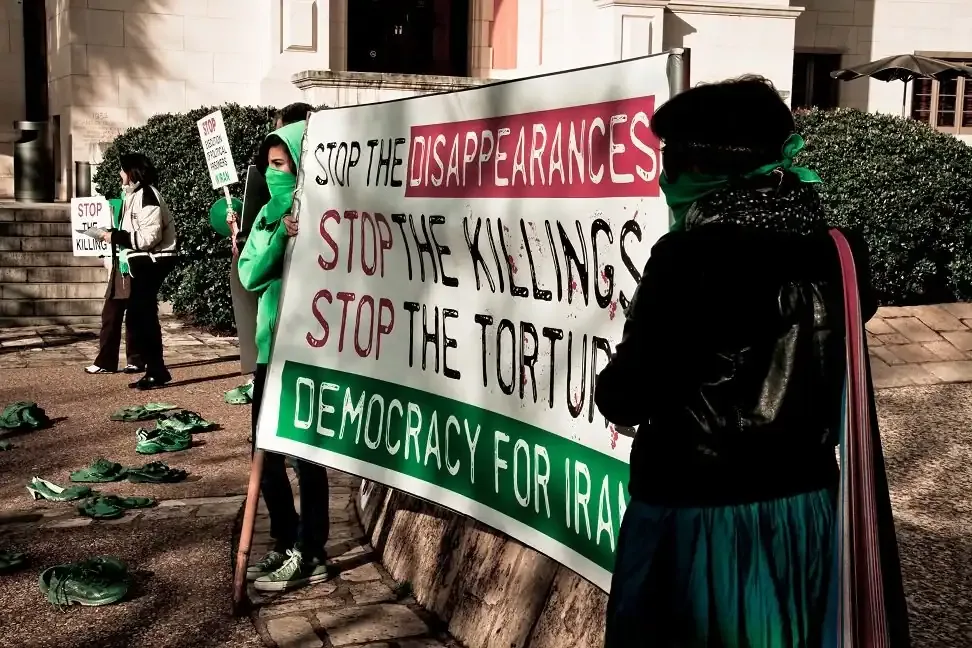
I’ve spent decades working in foreign affairs across the globe — including in Africa, Asia, and South America — alongside USAID, various NGOs, and on behalf of the American government financing poverty alleviation as part of its use of “soft power” in the world. In that time, I’ve seen firsthand how many of America’s foreign institutions affect people in the Global South, and how that has changed over time.
Let’s start with the obvious situation today: American foreign policy is a mess, and its direction is arguably less clear than ever. While we’ve gutted federal spending for international assistance and dismantled USAID, defense spending has hit record highs and direct foreign intervention has continued, with Venezuela and Iran as the prime examples and Cuba looming in the background. However, the story behind America’s foreign policy failures runs deeper and begins far earlier than Donald Trump’s involvement in national politics. His reading of the world, and his actions, are just the latest iteration.
As long as I’ve been working in international development (a wing of USG foreign affairs), the United States has repeatedly misread and misjudged countries of the Global South from cultural, economic, and military perspectives. A big part of this derives from a widely held belief in American exceptionalism — the idea that the United States stands on a pedestal internationally as the “leader of the free world” and is therefore always right. American hubris — partially deserved, but largely not — leads our leaders to dismiss the lives and cultures of non-Americans because of their perceived lack of global importance. And while only about 1.6% of Americans have lived abroad[1], views of superiority are also changing elsewhere. To some degree, such attitudes still exist in parts of Europe, the Middle East, and Asia, especially toward the poorest countries, but they are weakening as the Global South develops, as its profile in international affairs rises, and as its ability to communicate improves.
The History of American Overconfidence
American overconfidence abroad goes back decades. In Vietnam, for example, the United States expected to encounter a force that was poorly equipped and, in Washington’s view, incapable of mounting serious resistance after years of war with France. Instead, it met a galvanized force that was highly motivated, well trained, and deeply experienced in guerrilla warfare — one willing to do whatever it took to secure freedom from foreign influence. As a result, despite overwhelming conventional military superiority, America exited the Vietnam War in humiliation after losing more than 50,000 soldiers[2]. Instead of learning from that failure, American foreign policy doubled down on military superiority, producing similar losses of life in Iraq and Afghanistan. Bizarrely, despite Donald Trump’s rhetoric to the contrary on foreign interventions, we appear to be following the same playbook in Iran, only with a far more difficult path to extrication.
During my time in Somalia — where I lived from 1983 to 1995 — I saw how American exceptionalism played out in a particularly unique and, at the time, high-stakes third-world setting. In the late stages of the Cold War, Somalia’s president, the brutal dictator Mohamed Siad Barre, switched allegiances from the Soviet Union to the United States. This came after Somalia’s archrival, neighboring Ethiopia, had done the reverse and invited the Soviets in. In the spirit of the Cold War, the United States accepted the swap, largely in exchange for the promise of a rapid-deployment base in Berbera, in the far north of the country. Its strategic location across from Yemen, near the mouth of the Bab al-Mandab Strait, made it highly attractive. In hindsight, especially given today’s conflict with Iran and the broader strategic importance of the region, it is easier to see why. Berbera sits close enough to Yemen’s coast to put Houthi missile range within reach.
When Siad Barre was removed from power in 1991, the United States backed Habr Gidr clan leader Mohamed Aideed as a potential successor. Bill Clinton apparently viewed him, for reasons that remain difficult to understand, as a “reasonable” strongman the U.S. could work with. Despite my writing to President Clinton warning that this was a fool’s errand, it took the brutal 1993 Battle of Mogadishu — the events later dramatized in “Black Hawk Down” — to make clear that Aideed was not a reliable partner and that U.S. policy in Somalia rested on a fundamentally flawed assumption. Clinton and the U.S. had failed to account for the fact that other Somali clans would not respond well to the elevation of one of their rivals, a mistake that contributed to further turmoil in the region and, ultimately, to the emergence of Al-Shabaab, now one of Al-Qaeda’s most powerful allies. This remains a classic example of how the United States, by failing to understand the political and cultural realities of another country, caused more harm than good. I wrote to then-President Bill Clinton about this issue, but to no avail.
A Colossal Mistake in Iran
The United States has a long, unfortunate history of backing coups, assassination plots, and regime changes abroad to its own detriment. Patrice Lumumba in the Congo is an immediate example[3]. So is Mohammad Mosaddegh in Iran, who was overthrown in the 1953 coup that the U.S. and the U.K. helped organize[4] in part to protect Western access to Iranian petroleum assets.
Driven by the same assumptions about American exceptionalism, the Trump administration’s actions toward Iran may prove to be among the most consequential blunders of all. In Somalia, as in the Congo and Iran, the United States seems to have assumed that removing an adversarial leader by force would open the door to a more compliant, pro-American order. So far, the results have been just as flawed as one would expect.
Iran is not a country with a shallow sense of history or identity. It has more than 5,000 years of civilization behind it, reaching back to the Persian empires, and a political culture shaped by that long memory. By comparison, the 250 years of the United States are a blink of an eye. It should surprise no one that Iranians — whether they support the Khamenei regime or not — are not eager to let an outside power dictate the future of their society. More critically, and arguably unique to Iran is the acknowledgement of resistance against oppression through suffering as a core tenet of national identity. This attitude is labeled the Karbala Complex[5], and is central to Shia Islam — the dominant religious sect of Iran in its recent history. Its clearest expression today is within the Islamic Revolutionary Guard Corps (IRGC), the institution most steeped in Shia martyrdom doctrine, where threats of war are more likely to galvanize than to silence.
Military means may nevertheless be unavoidable on certain occasions, but they should come only after a serious understanding of the situation on the ground. Without that, force is more likely to produce unintended consequences than durable results. If the goal was to weaken the regime, the evidence to date suggests the opposite.
This stands in line with the aforementioned Karbala Complex as it operates within the IRGC specifically, which predicts that material suffering is more likely to be metabolized by that institution as vindication than felt as failure. As such, the IRGC should not be expected to be made to “crack,” and advancing American interests in the region will require a different angle.
The United States can still advance its interests in the Global South. But doing so successfully requires something Washington has rarely shown in practice: humility, patience, and a willingness to understand other societies on their own terms. This requires a more nuanced anthropological and historical approach to the world than one premised on the assumption that brute force always convinces.
You cannot govern abroad as though every country is simply a smaller version of America, particularly in countries already biased against the United States through cultural and historical factors. Without that understanding, there is no realistic way to design an appropriate strategy, let alone one that works. If U.S. policymakers want better results, they will have to stop confusing power with understanding.
Estimates of Americans living abroad range from roughly 5.5 million (Association of Americans Resident Overseas) to 9 million-plus depending on methodology, against a U.S. population of about 340 million — a range of roughly 1.6% to 2.6%. See Association of Americans Resident Overseas, "How Many Americans Live Abroad?", aaro.org/living-abroad/how-many-americans-live-abroad. ↑
U.S. military deaths in Vietnam totaled approximately 58,000. By comparison, combined U.S. military deaths in Iraq and Afghanistan (2001–2026) total roughly 7,073 — about one-eighth the Vietnam toll. The broader human cost of the post-9/11 wars is far higher by other measures: Brown University's Costs of War project estimates over 940,000 direct deaths and a total toll (including indirect deaths) of 4.5–4.7 million across Iraq, Afghanistan, and related theaters. See USAFacts, "US military deaths by year," usafacts.org/articles/how-have-military-deaths-changed-over-time, and Costs of War Project, Brown University, "Human Costs," costsofwar.watson.brown.edu/costs/human. ↑
The U.S. Senate's Church Committee documented CIA planning around the assassination of Patrice Lumumba, including the preparation of poison intended for use against him, in its 1975 report on assassination plots involving foreign leaders. See National Security Archive, George Washington University, "CIA Assassination Plots: The Church Committee Report 50 Years Later," nsarchive.gwu.edu/briefing-book/intelligence/2025-11-20/cia-assassination-plots-church-committee-report-50-years. ↑
The CIA's role in planning and directing the 1953 coup was formally acknowledged by the agency itself in declassified internal history documents released in 2013, ending decades of official denial. See "In declassified document, CIA acknowledges role in 1953 Iran coup," CNN, August 19, 2013, cnn.com/2013/08/19/politics/cia-iran-1953-coup; National Security Archive, George Washington University, "CIA Confirms Role in 1953 Iran Coup." ↑
The term "Karbala Paradigm" originates with anthropologist Michael M.J. Fischer, who introduced it in Iran: From Religious Dispute to Revolution (Cambridge, MA: Harvard University Press, 1980) to describe how the martyrdom of Husayn at Karbala (680 CE) functions as an enduring template for Shia political identity and resistance to oppression. I developed this argument at greater length — including its relevance to the IRGC specifically — in The Unpopular View, Episode 6, "From Timbuktu to Tehran" (March 2026): the deep-rooted currents within Shia Islam that shape Iranian and IRGC behavior are a factor Western policymakers discount at their own risk. ↑
This article was written by Michael I. Brown, host of the Unpopular View Podcast, with editorial assistance provided by Sohan Sahay, a student at Northwestern University.